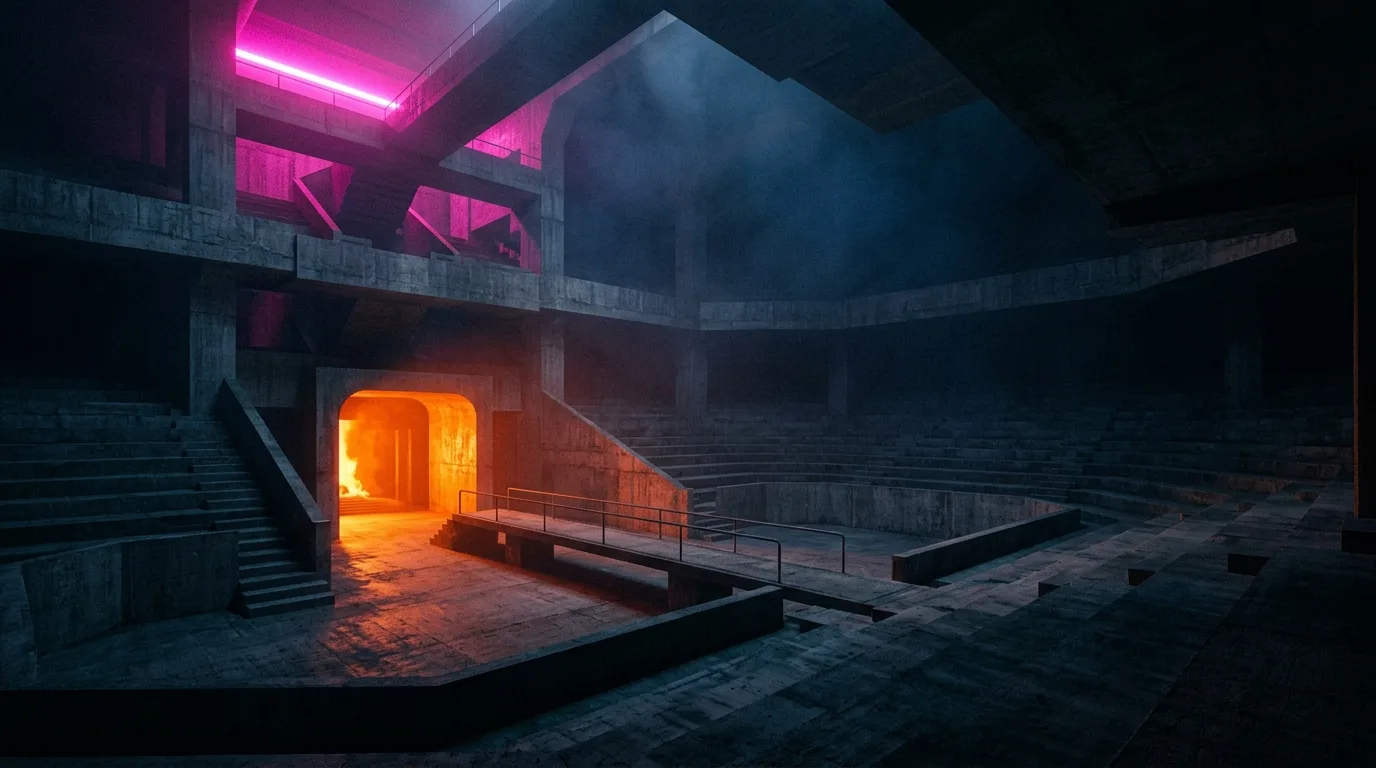
How raycasting draws every corridor in Neon Hellfire
A plain-language look at the 2.5D raycasting trick behind Neon Hellfire: one ray per screen column, wall heights from distance, and why it still feels fast.
A plain-language look at the 2.5D raycasting trick behind Neon Hellfire: one ray per screen column, wall heights from distance, and why it still feels fast.
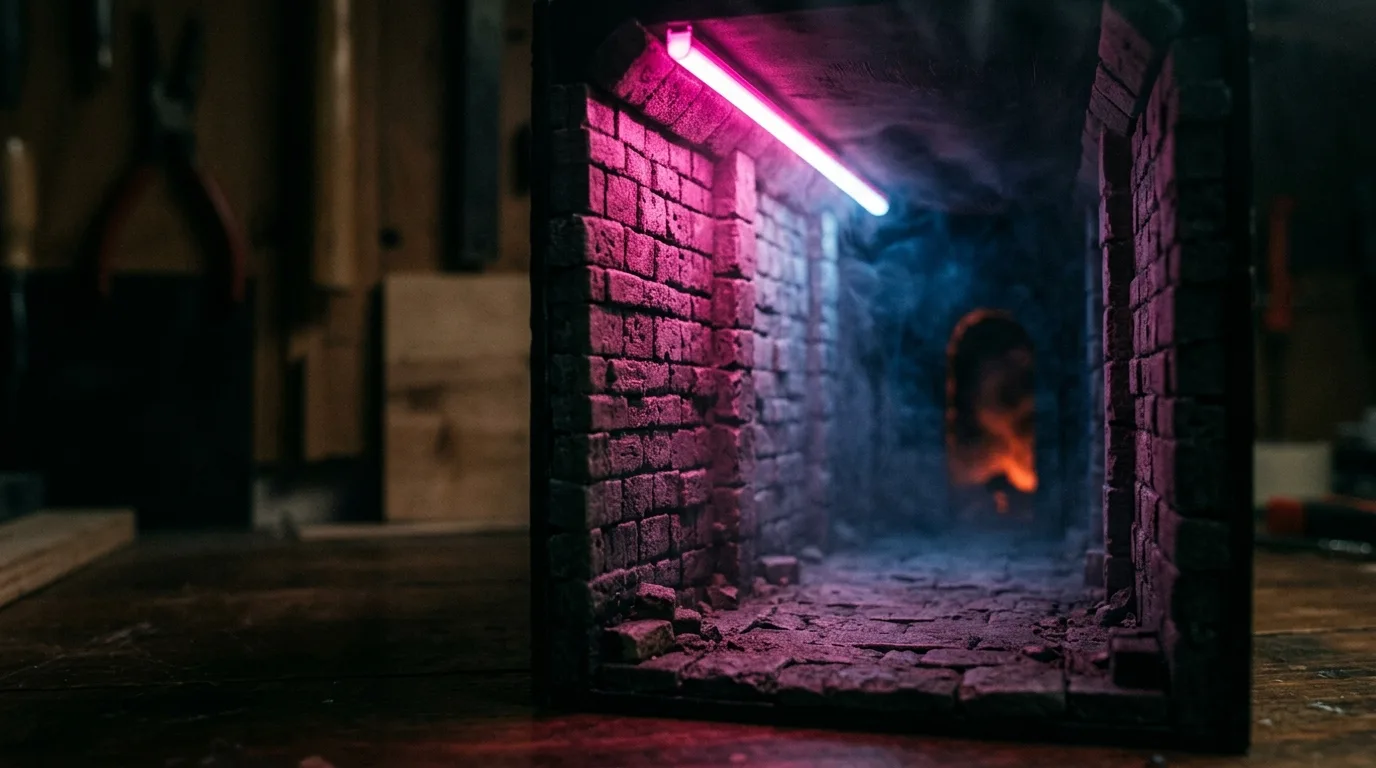
Neon Hellfire looks 3D, but under the hood the arena is a flat grid of tiles. Every frame, the game casts one ray per column of the screen from your position into that grid and stops the ray when it hits a wall.
The further a ray travels before it hits a wall, the shorter that slice of wall is drawn. Stack a few hundred slices side by side and your brain reads it as a corridor stretching into the dark. It is the same idea that powered the first wave of shooters in the early nineties.
Because the world is a grid, the math per ray is tiny. That leaves the frame budget for what matters in a boomer shooter: snappy turning, instant firing and demons that rush you without stutter.
The pixel look is not a filter laid on top. It comes straight out of how the image is built, which is why the neon edges stay crisp instead of smearing.
Art · · 1 min read
The colour rules behind Neon Hellfire: a near-black base, one hot magenta accent for what matters, and ember orange reserved for fire and danger.
Design · · 1 min read
How Neon Hellfire tunes its opening arena so demons close the distance fast, forcing movement over hiding and keeping every run short and intense.